Connect@t, a zero project about adolescence
This year we have started the subject of "Projects" and have dealt with the internalization of oneself and adolescence. To work and deepen these aspects, we have done different activities within the "Connect@t" project.
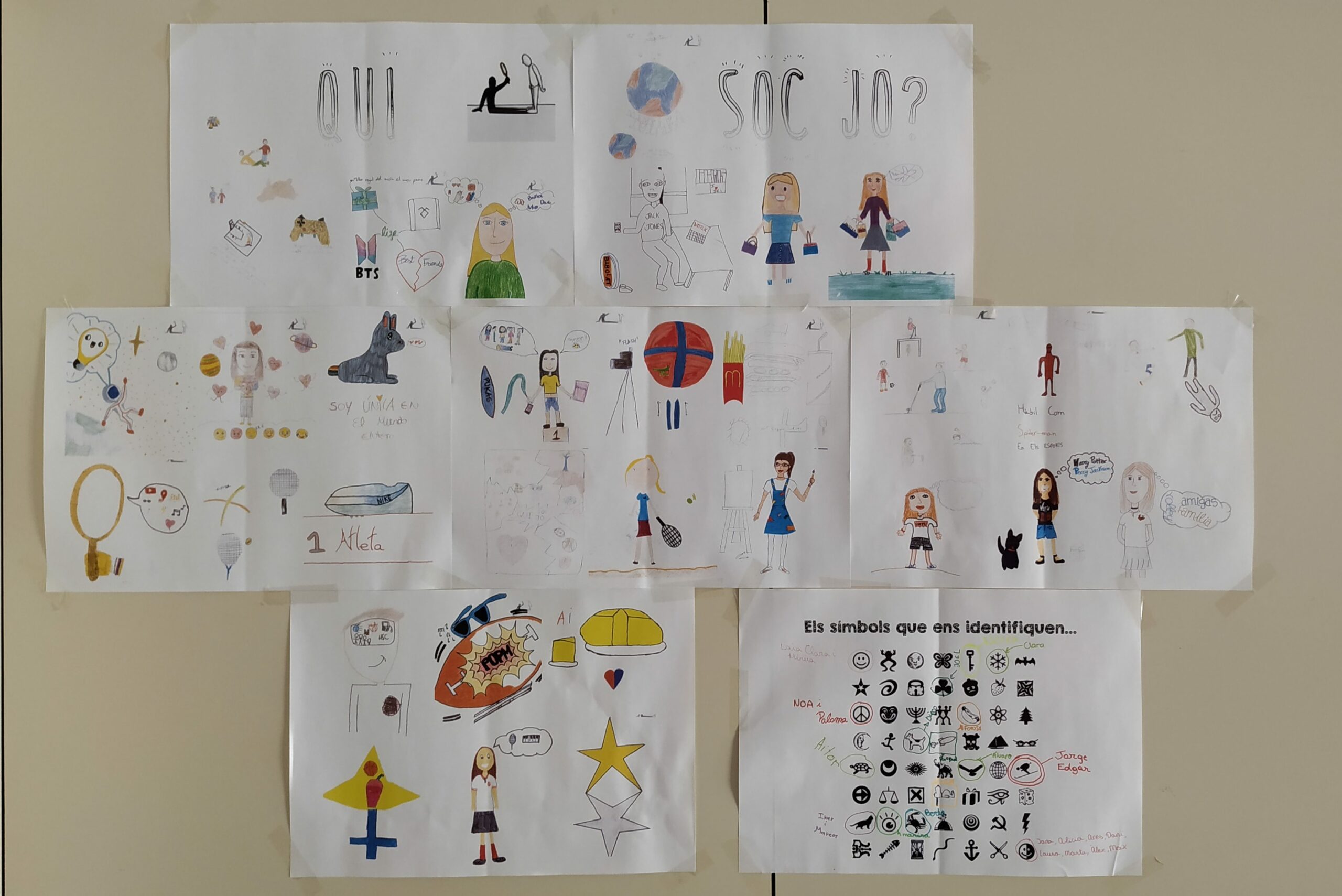
The first activity we did is called "Who am I?" and it consists of drawing us as we think we are ourselves, in order to go deeper into how we are. In the second activity we chose which of the symbols in an image (a happy face, a strawberry, a bat, a cheese, a snake, a moon...) was the one that most represented us and we explained why. It was very interesting to learn about the different symbols that people chose and to find out which people had put the same symbol as you. In the next activity we continued to choose. This time, those adjectives that most identified us from a given list (for example reserved/enthusiastic, impulsive/quiet/nervous...). First we defined them, then we chose them and finally our colleagues told us which ones identified us the most. It was really very curious to know how your peers see you.
Once we had covered aspects related to the self, we focused on adolescence. To start, in groups, we made an acronym for the word "adolescence" in order to define it and then, at home, we did the same but instead of doing it ourselves, our parents did it from their point of sight and they told us what their adolescence was like. We also attended a conference by Montse Arall, the center's psychopedagogue. In it, he defined adolescence and explained the physical and psychological changes and stages, and the truth that helped many of us know what was really happening to ourselves and our bodies at this stage in which we meet
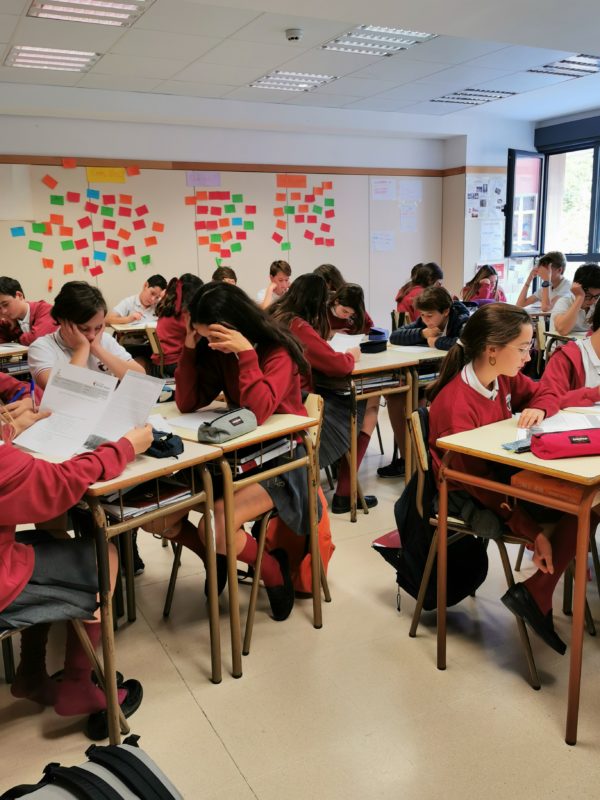
Knowing all this, we made a mind map to embody everything that had been explained to us and we did a compare-contrast between our adolescence and that of our parents or relatives. In doing so, one of the conclusions we got was that we probably have it easier than our parents because we can find information whenever we want (although we have to be careful about what we read).
To continue delving deeper into adolescence, we focused on its presence in the media. To begin, we listened to the song "We are teenagers" and did the "word-idea-sentence" thinking routine to analyze it. Next, we applied the "I see-I think-I wonder" routine to analyze different fragments of films about problems that can occur in adolescence. Afterwards, each group had to do a role-play about this problem in order to analyze it with all the colleagues. These activities made us reflect on problems and consider how we would solve them.
To finish the project we focused again on ourselves and our class group through the activity "Express how we feel". We wrote down how we felt about each member of the group. Each of us had a small paper per person (even for the tutor) and we had to write following this format “I feel… (put a feeling) when you… (something the other person does)… because … (the reason why I feel this way) and I would like … (what you would like to happen)”. Once they were all written, we distributed them and everyone received an envelope with all the messages. We think that this activity has made many people get along better with each other.
Finally we did a meta-reflection, to think about what you learned, how you learned it, what was easier/difficult/new for me, why every activity we did is important, when I will be able to use it and what opinion I have of the activities carried out
In conclusion, we really enjoyed this project and we learned a lot about the stage we are living in, we felt identified and we learned from a more entertaining perspective.
Marta Menargues and Marina Escarvajal, (2nd ESO students)